August 3 – 7, 2026 · Copalis Beach, WA
5
Days
50+
Miles Beach
Cabin
Lodging
All In
Inclusive
The Pacific Northwest Coastal XC is not a training event. It is not a race. It is five days of private, all-inclusive flying, eating, storytelling, and community on one of the most underflown coastlines in the world. Fifty miles of open Pacific beach, no crowds, no access roads — just ocean wind, low tide flats, and sea stacks rising out of the fog.
Guests stay in private beachfront cabins near Copalis, Washington. Every meal is taken care of. Transportation to and from the event is included. Paramotors are available to rent if you need one. The evenings belong to the fire — this is where the real conversations happen, where pilots from different backgrounds compare notes and friendships get built that last.
Fewer people have seen the remote coastal corridors on this itinerary than have been to space. That is not a marketing line — it is a fact worth sitting with before you decide whether to come.
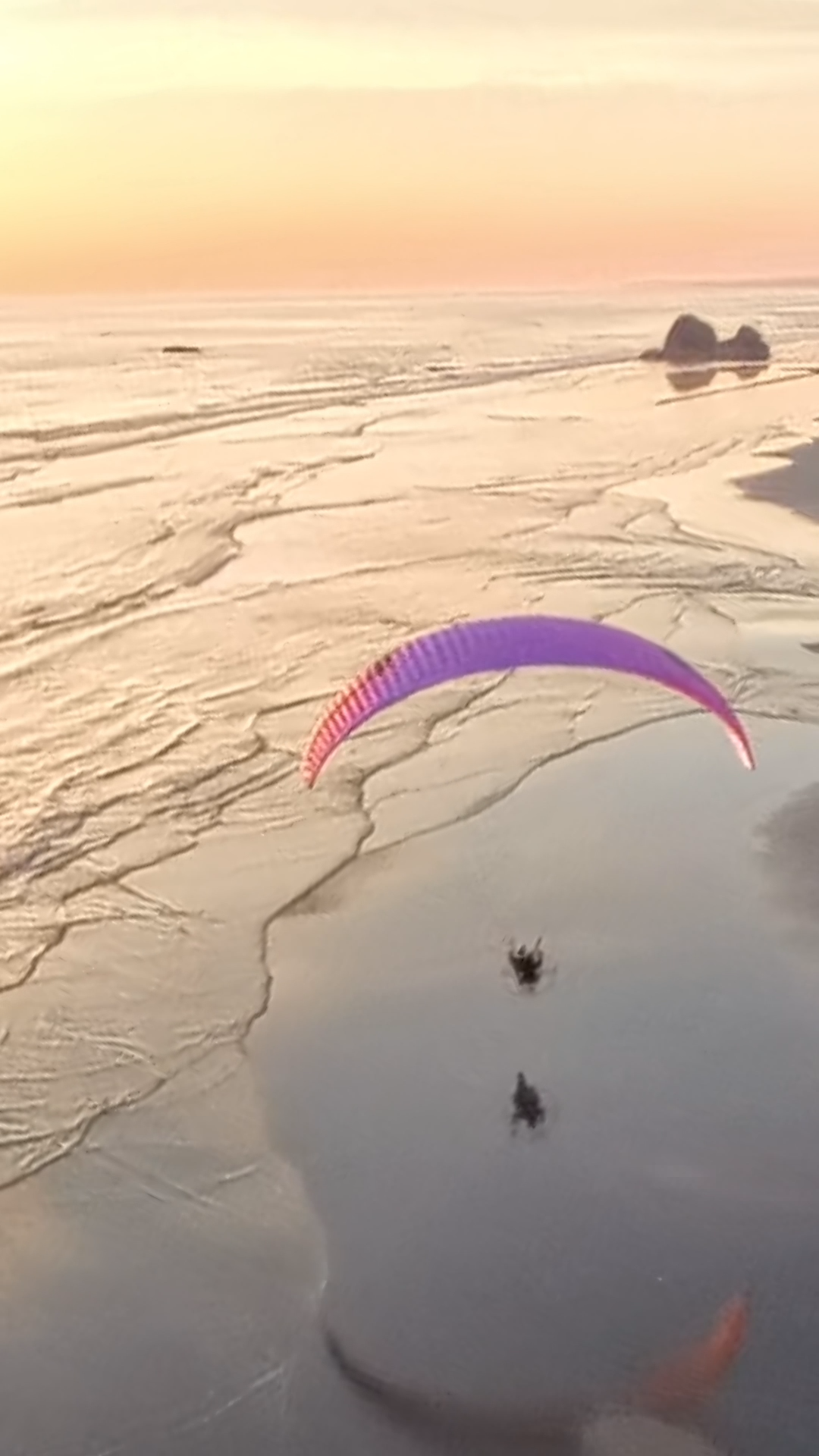
Copalis Beach — wide hardpack low-tide runway, natural paramotor highway running 12 miles with no obstacles
Moclips bluff corridor — elevated coastal shelf with ridge lift and unobstructed Pacific horizon views
Point Grenville — sacred Quinault headland, culturally significant and visually unlike anywhere else on the coast
Raft River estuary — remote tidal river mouth where bald eagles congregate and the beach narrows to a single pass
Iron Springs sea stacks — basalt formations rising 60 ft from the surf, best viewed at 80 ft AGL at low tide
Copalis Rock National Wildlife Refuge — offshore island corridor accessible only by air, no boat landings permitted
Ocean City State Park dunes — cross-country dune field at the southern leg, massive scale visible only from above
Pacific Beach — small fishing community with a WWII airstrip, one of the only legal beach landing strips in Washington
The Washington coast between Copalis and Moclips is one of the most active wildlife corridors on the Pacific Flyway. From a paramotor at 200 ft you are inside the ecosystem in a way no boat or beach walk can replicate.
Bald eagle
Concentrated at river mouth estuaries along the route, especially Raft River and the Copalis River outlet. Often perched on driftwood at the tide line — visible at low altitude without flushing them.
Harbor seal
Haul-out colonies on exposed sandbars at low tide. Dozens visible from above. They are unbothered by paramotors passing at altitude.
California & Steller sea lion
Present near Copalis Rock and the offshore reef systems. Occasional surfacing visible from 100 ft AGL in calm conditions.
Brown pelican
Seasonal visitor in late summer — V-formation glides along the surf line, often at exactly paramotor cruise altitude. The proximity is remarkable.
Dungeness crab and razor clam flats
The exposed tidal flats at low tide reveal the geometry of the shellfish beds — visible as dark patterned bands in the sand from above.
Shorebird flocks
Western sandpiper, dunlin, and dowitcher migrations peak in August. Murmuration-scale flocks lift off the beach ahead of the motor noise — one of the more surreal sights of the route.
The Pacific horizon
Fifty-plus miles of unobstructed ocean to the west. On a clear day the horizon curves. There is no other landmark — just blue water to the edge of the world.
Olympic Mountains
The full Olympic range is visible to the northeast from altitude — permanent snowfields on the high peaks above the coastal rainforest. The contrast with the open beach below is hard to describe.
Iron Springs sea stacks
Basalt columns rising directly from the surf. At low altitude and low tide the scale relative to your wing is visceral. Some of the most photogenic flying of the entire route.
Low-tide tidal flat geometry
Exposed at maximum ebb the tidal flats take on abstract patterns from above — sand channels, shellfish beds, creek braids, and dark weed lines visible for miles.
Copalis Rock offshore
A small wildlife refuge island a quarter mile offshore. Covered in nesting seabirds, surrounded by active surf. The transition from beach to open ocean corridor happens here.
Sunset over the ocean
Evening light on the coast in August hits the water at a low angle and turns the surf orange. The flights that push into late afternoon catch it on the way home.
Private beachfront cabins on the Pacific coast near Copalis, Washington. Each cabin sleeps two guests. You are not in a hotel — you are 40 feet from the tide line. Linens, heat, and hot water are all handled. All you bring is yourself.
The evenings are built around the fire. No agenda, no schedule — just pilots at the end of a good day comparing notes, telling stories, and making friends. This is the part of the trip most guests say they remember longest. Bring something to share and an open ear.
All meals are included from dinner on arrival day through breakfast on departure day. Expect fresh Pacific seafood, grilled proteins, and proper morning spreads — not catered trays. Coffee is always on. Evening meals are shared at the fire. Dietary needs accommodated with advance notice.
Open beach flying is forgiving terrain but coastal conditions demand respect. Every guest flies with full support.
A certified instructor leads every flight. Route, altitude, and conditions are briefed before each launch. No one flies solo without check-in.
A ground crew vehicle tracks the route and is positioned for rapid retrieval anywhere along the 50-mile beach corridor.
Marine layer, sea breeze timing, and fog burn-off are briefed each morning. Coastal conditions are managed differently than inland — we know this coast.
All pilots carry a Garmin inReach. The guide monitors live tracks throughout each flight.
All rental units are inspected and test-flown by staff before the event. Rental pilots receive a full equipment brief on day one.
PPG2 rating minimum. This event is suitable for newer pilots — beach flying is low-consequence terrain with instructor on site. Beginners welcome with disclosure.
2026 — Session 1
August 3 – August 7, 2026
6 spots available
2026 — Session 2
September 7 – September 11, 2026
8 spots available
A 10% deposit ($682) holds your spot. The remaining balance is due in full two months before the event date. Paramotor rentals require a separate refundable insurance deposit.
All-Inclusive Trip Fee
$6,820
per person · deposit $682
Also Included
Not Included
Paramotor Rental Add-On
$250
+ refundable insurance deposit
Full 5-day paramotor and wing rental, inspected and test-flown by staff. Available in limited quantities — request at time of registration.
Fully all-inclusive. Spots are limited. A 10% deposit holds your place — request an invite and we'll be in touch within 48 hours.
SEATTLE PARAMOTOR
© 2026 Seattle Paramotor. All rights reserved.